
At the Space Northwest Symposium in Federal Way, Washington, Dale Goulding, chief operating officer at Forge Digital, chatted with Michael Reilly, chief strategy officer at Varda Space Industries. A Varda orbital capsule sat on display nearby, underscoring the state’s growing presence in the final frontier.
Preliminary analysis indicates that Washington’s space sector has more than doubled its economic contribution between 2018 and 2022, and has nearly doubled again in the years that followed. While the numbers are encouraging, leaders in the industry wonder whether the Pacific Northwest can keep pace with established hubs in Florida, Texas and Colorado.
That mixed outlook made headlines when Stoke Space chief executive Andy Lapsa questioned whether he would choose the Seattle area as his home base if he had to start over — just before taking the stage as a member of Governor Bob Ferguson’s Washington Space Council.
Mayor Dana Ralph of Kent, where Stoke is headquartered, reinforced the message during the kickoff of Seattle Space Week at the Museum of Flight. “We don’t take you for granted,” she told a room of CEOs, investors and other VIPs, emphasizing local commitment.
Seattle Space Week, highlighted by the Space Northwest Symposium, offered a clear view of the challenges and opportunities shaping Washington’s space ecosystem. Below are four key problems and four promising prospects.
‘We have a problem’
The launch crisis
“The supply‑demand mismatch in launch services has become a crisis,” said Stoke Space CFO Tim Beard. “It’s crazy how quickly the market has shifted.” The surge in demand for satellite constellations — think Starlink, Amazon’s Project Kuiper, and future AI‑focused networks like SpaceX’s Starmind — has outpaced the number of available launch slots. At the same time, Blue Origin’s New Glenn, United Launch Alliance’s Vulcan, and SpaceX’s transition to Starship have each encountered setbacks, shrinking the pool of reliable launch providers. The resulting crunch hits Seattle‑based satellite ventures especially hard.
Workforce shortage
Finding skilled technicians and engineers is another bottleneck. Bill Bruner, CEO of New Frontier Aerospace, ranks the talent gap as his top challenge. “We need people who can handle both the high‑precision engineering work and the more routine, post‑secondary technical roles,” he explained. “A national strategy to expand apprenticeships and on‑the‑job training is essential.”
Mayor Ralph urged local governments to partner with industry to streamline credentialing and training programs, ensuring the workforce evolves alongside the sector’s needs.
Funding from distant sources
Much of the capital flowing into Washington’s space startups originates outside the region. “Seattle has plenty of venture capital, but not many space‑focused investors,” noted Varda’s Michael Reilly. “Most of the money comes from Los Angeles and the Bay Area.”
Brian Monnin, co‑founder and chief commercial officer of Sophia Space, argues that midsize companies need diversified financing. “Debt financing, combined with public‑private partnerships that bring traditional banks into the mix, could fill the middle ground that’s currently under‑served,” he said.
Regional competition
Executives frequently point out that other states offer more aggressive incentives. “The incentives just aren’t here,” Monnin observed. “When we decide where to locate our manufacturing facilities, we compare the package offered by sovereign funds in New Mexico, Louisiana and others — packages that far exceed what Washington currently provides.”
Stoke Space CEO Andy Lapsa echoed this sentiment, noting that Colorado, Texas and Florida are actively courting his company. “Washington is the right home for us, but we need policymakers in Olympia and beyond to hear our request for support,” he urged.
‘Light this candle’
Public‑private partnerships
The newly formed Washington Space Council is unlikely to create a multibillion‑dollar fund right away, but it can serve as a collaborative forum for industry and government to explore realistic pathways for growth. Last year, the Governor’s Economic Development Strategic Reserve Fund awarded $350,000 to Portal Space Systems to expand its 50,000‑square‑foot satellite manufacturing plant in Bothell — a model that could be replicated for other ventures.
Satellite offices and manufacturing footprints
Space companies need not be headquartered in Washington to benefit the state’s ecosystem. Cowboy Space, based in California, recently opened a 291,035‑square‑foot design and manufacturing facility in Kent. BlackSky, headquartered in Virginia, builds its satellites in a 22,000‑square‑foot factory in Tukwila. Even SpaceX, though its corporate office has moved to Texas, produces more than half of the world’s satellites at its Redmond and Woodinville sites.
Mayor Ralph highlighted the region’s enduring strengths: a deep talent pool, a mature supply chain, established industrial capacity, and a culture of making things — attributes that attract out‑of‑state firms to set up satellite offices.
Upcoming launch vehicles
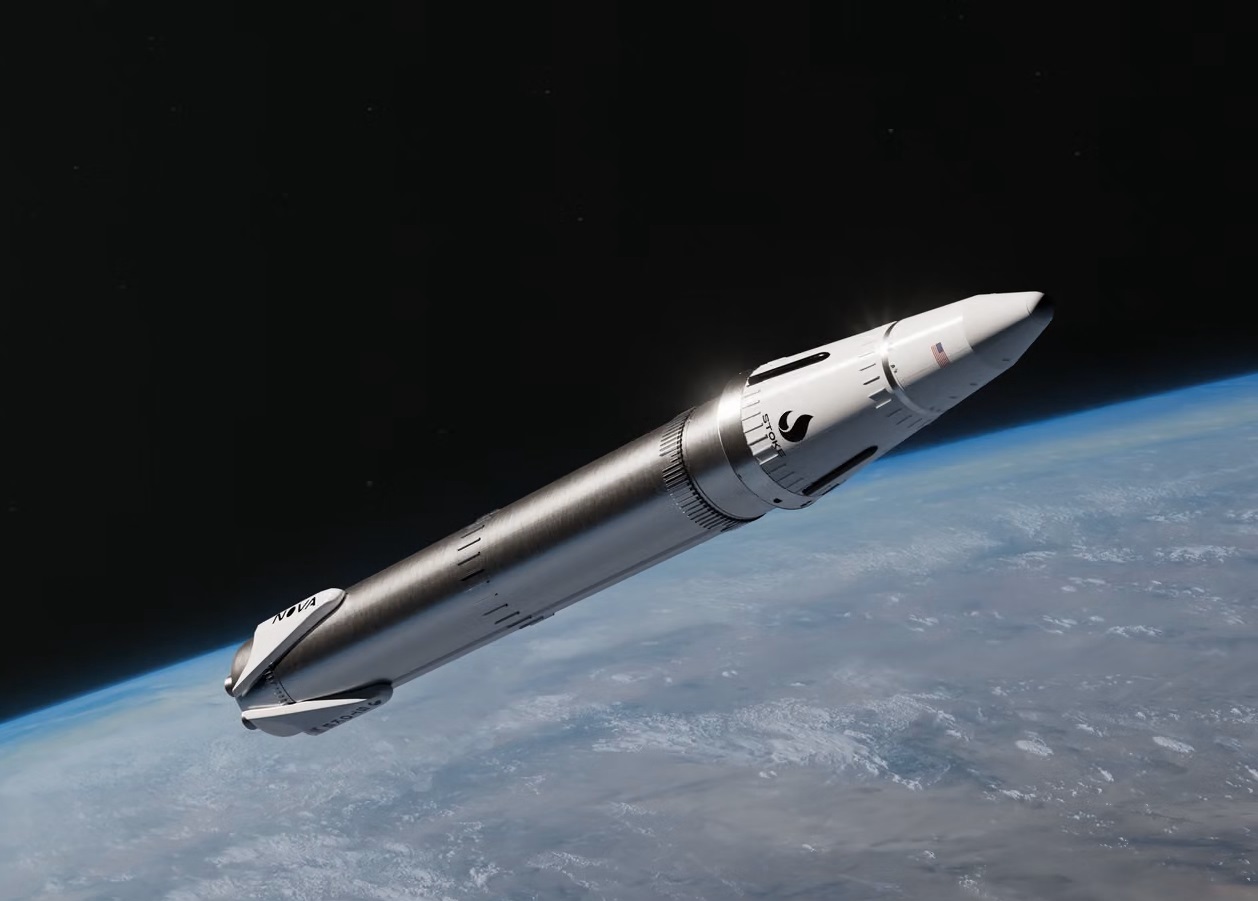
The silver lining to the launch crunch is that companies like Stoke Space are developing new rockets to fill the gap. When SpaceX’s Starship finally reaches orbit, it could dramatically reshape launch capacity. Ron Faith, CEO of RBC Signals, called the first orbital Starship flight “a pretty big milestone.”
New entrants such as Blue Origin’s New Glenn, United Launch Alliance’s Vulcan, Rocket Lab’s Neutron, Firefly Aerospace’s Alpha, Relativity Space’s Terran R, and Stoke Space’s Nova are slated to join the market, expanding the number of available launch services.
A launch pad closer to home
Washington still lacks a nearby NASA center and an orbital launch pad. NASA Administrator Jared Isaacman, during a recent visit to Redmond, said adding new NASA centers is unlikely in the near term. However, Governor Ferguson indicated that the Washington Space Council will explore the possibility of developing commercial launch capabilities within the state.
Monnin wondered why Washington’s space firms haven’t cultivated stronger ties with nearby military installations such as Fort Lewis‑McChord or the Bremerton naval base, which could serve as natural partners for defense‑related orbital compute work. He described the missed connection as a “shame.”
Geography presents a challenge: the Pacific Northwest’s terrain makes it difficult to site a launch pad without endangering populated areas, which is why Blue Origin and Stoke have chosen Florida for their current pads. Yet Stoke’s Tim Beard was not dismissive when asked about a coastal launch site in Washington. “Launching from the Washington coast would be fantastic,” he said, noting that the coast is slightly closer than the long trek to Cape Canaveral, and that the company would welcome a partnership to make it happen.
For the full event schedule, visit the Space Northwest website.
Image Credit: www.geekwire.com





