
- Bitcoin futures and options show whales still prefer hedging downside risks as socio-economic risks mount.
- Rising Treasury yields and declines in AI stocks fuel risk aversion, yet BTC’s strength signals continued decoupling.
Market Overview
Over the past week Bitcoin has held firm below $65,500, yet it has drifted away from traditional market moves as traders locked in profits from memory‑chip stocks amid concerns that AI valuations had become stretched. While the price action suggests resilience, on‑chain and derivatives indicators show that even the most aggressive participants remain skeptical about a push toward $70,000.
Bitcoin perpetual futures annualized funding rate. Source: Laevitas
The perpetual futures funding rate steadied at 8% on Monday, unchanged from the prior week. When bullish leverage becomes excessive, the rate can climb above 12% — a level not seen since early July. Whether this flat reading reflects worries about a tech‑stock sell‑off or regional conflict remains uncertain.
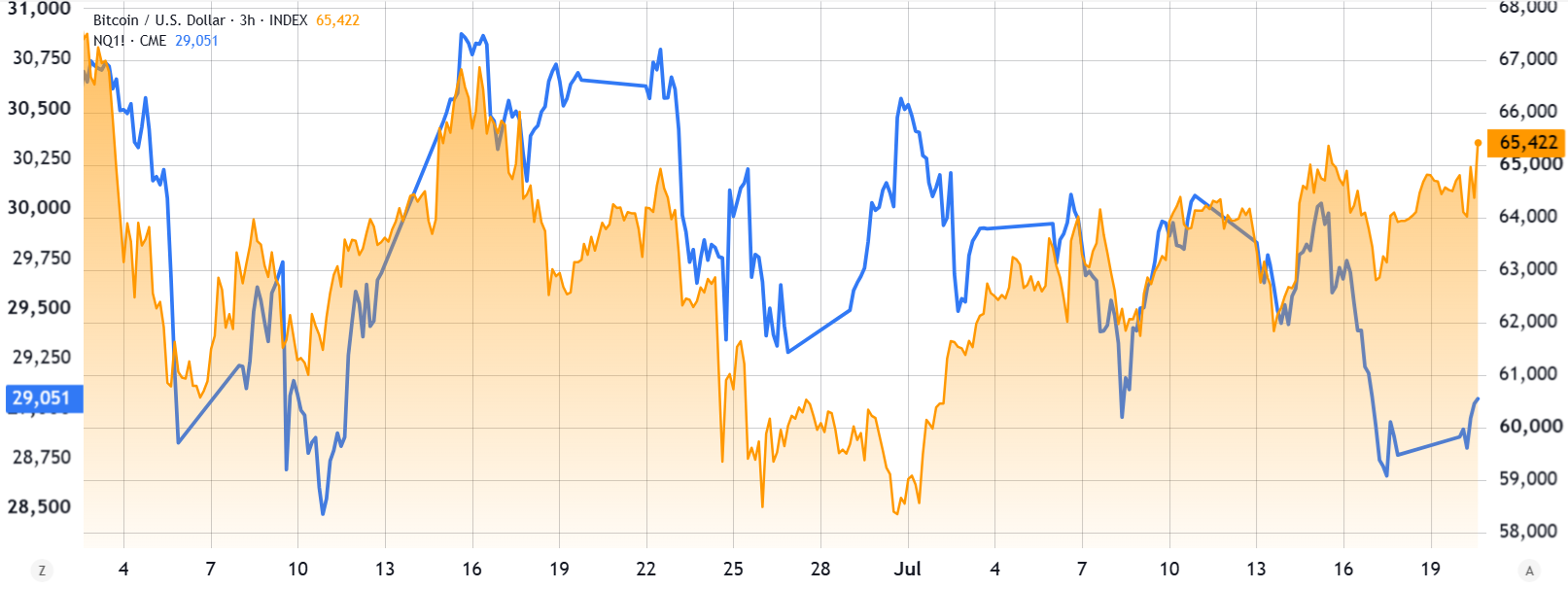
Nasdaq-100 futures (left) vs. Bitcoin/USD (right). Source: TradingView
The Nasdaq‑100 slipped below 28,800 for the first time in five weeks, while Bitcoin rallied through the weekend and reclaimed $65,000 on Monday. MicroStrategy’s recent $263 million equity raise has eased concerns about a potential wave of Bitcoin selling pressure.
Investors grew uneasy over Strategy’s $1.76 billion annual dividend to preferred shareholders and the $2.6 billion of convertible debt maturing in 2028‑2029. To strengthen its balance sheet, the firm boosted cash reserves to $3.22 billion, aiming to remove the uncertainty tied to unrealized Bitcoin losses.
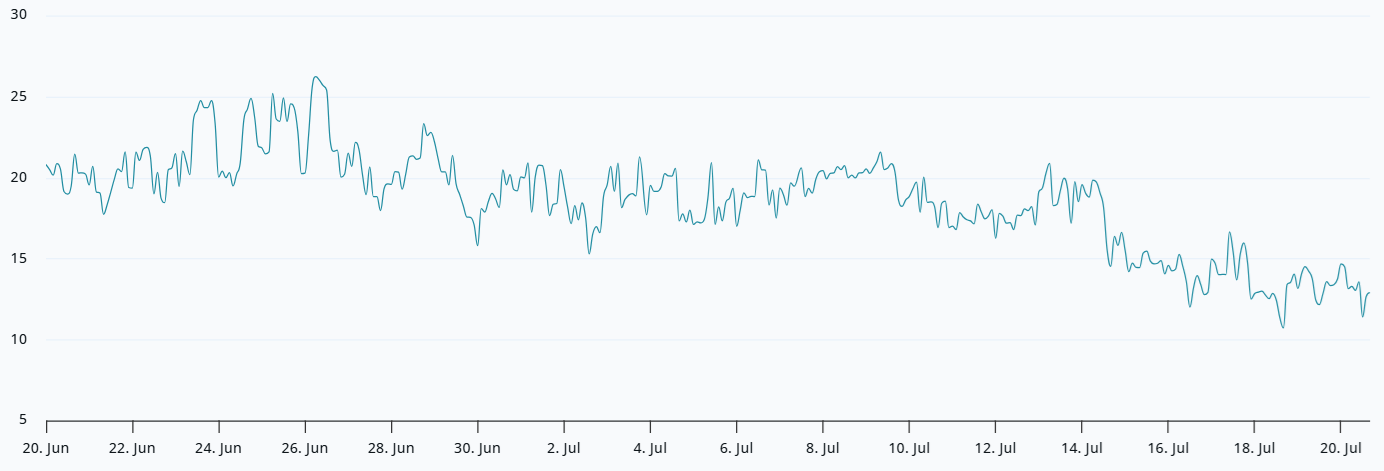
Bitcoin 30-day options delta skew (put-call) at Deribit. Source: Laevitas
The 30‑day options skew settled at 13% on Monday, meaning puts traded at a premium to calls. In a neutral market the reading would lie between -6% and +6%. Even after a drop from last week’s 19% skew, whales and market makers stay wary of downside exposure.
Bitcoin’s resilience amid AI stocks weakness and increased risk aversion
The recent pullback in AI‑focused equities has nudged investors toward a more cautious stance. Sharp declines in IBM, SanDisk, Oracle, ARM, SpaceX and Intel coincided with a rally in 5‑year Treasury yields, as bond holders demanded higher returns. This shift hints at expectations for continued accommodative monetary policy amid mounting fiscal pressures.
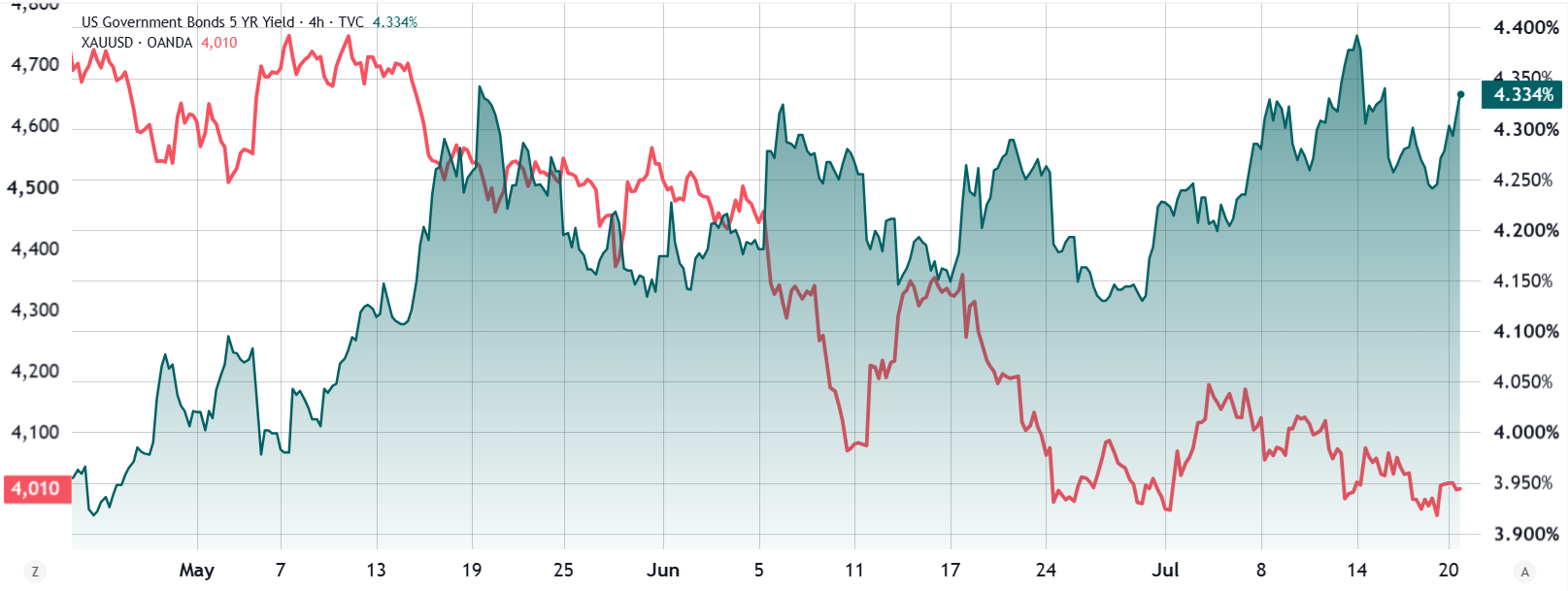
Gold/USD (left) vs. US 5-year Treasury yield (right): Source: TradingView
The 5‑year Treasury yield rose to 4.33% on Monday, up from 4.22% two weeks earlier. Meanwhile gold has been trending lower since mid‑May, underscoring how even traditional safe‑haven assets feel the strain of weaker global growth and Middle‑East tensions.
On Monday President Trump pledged a response to Iran’s missile strike that killed U.S. troops in Jordan, sending risk assets into a nervous state. Bitcoin’s climb to $65,500 reinforces the case for further decoupling from traditional finance, especially as monetary base metrics expand. Even without strong derivative sentiment, a move toward $70,000 could be sparked by lackluster earnings from AI‑heavy companies.
Image Credit: cointelegraph.com